



Is the PS6 Overhyped? New Reports Challenge Claims of Massive Performance Gains
The gaming world is buzzing with anticipation for Sony’s next heavyweight, the PlayStation 6. While most industry insiders point toward a late 2027 release, a heated technical debate has broken out among the world’s most prominent leakers.
At the heart of the controversy is a simple question: Just how powerful will this machine actually be? While some headlines promise a 10x performance boost, newer, more grounded reports suggest we might need to manage our expectations.4
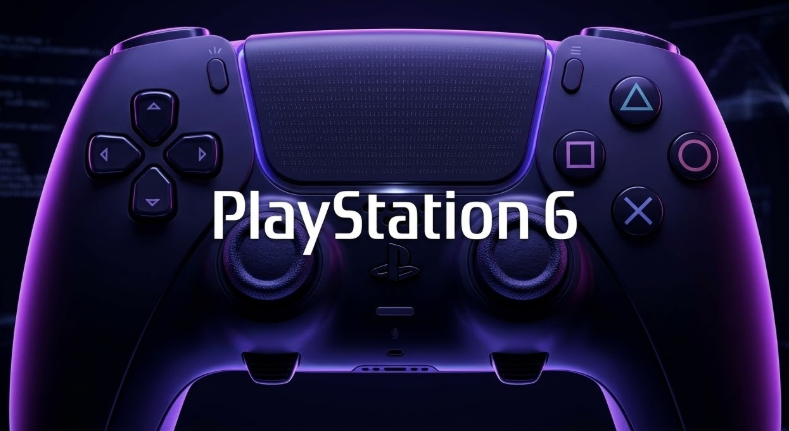
The 10x Performance Myth: Theoretical Power vs. Real-World Gaming
The drama kicked off when the YouTube channel Moore’s Law is Dead (MLID) suggested that the PS6 would boast ray tracing capabilities 10 times greater than the base PS5. To the average gamer, “10 times faster” sounds like a magic wand that turns a stuttering 30 FPS game into a hyper-smooth 300 FPS masterpiece.
KeplerL2 Says MLID Is Incorrect About PS6 Ray Tracing Performance, KeplerL2 Says PS6 Ray Tracing Will Be 3x Faster Ray Tracing Not 10x Than PS5 (Like MLID Said), KeplerL2:
“I’ve explained this before but MLID is misinterpreting AMD docs wrt performance. He thinks if a slide says… pic.twitter.com/9ioMEaRI7J
— @Zuby_Tech (@Zuby_Tech) April 17, 2026
Understanding “Theoretical Value” (The Lehman Explanation)
Imagine you buy a car with a speedometer that goes up to 300 km/h. That is the theoretical value. However, if you are driving through a crowded city with traffic lights, speed bumps, and narrow turns, you might only ever reach 50 km/h.
In console terms, a “10x theoretical boost” refers to the raw mathematical power of the chips under perfect lab conditions. But games aren’t labs; they are complex “cities” of data. KeplerL2, another highly respected hardware leaker, pointed out that MLID likely misinterpreted internal AMD documents. Just because a chip can perform 10 times more calculations per second doesn’t mean the game engine can turn those calculations into 10 times more frames on your TV.
The Frame Rate Fallacy
In simple terms, if the PS5 struggles to hit 60 FPS in a ray-traced game, the PS6 won’t automatically hit 600 FPS. There are other “bottlenecks”—like how fast the memory can move data or how quickly the CPU can tell the GPU what to draw—that prevent a 1:1 translation of raw power into game speed.
The Realistic Forecast: A 3x Performance Jump?
KeplerL2’s counter-argument is based on performance data from actual titles currently in development. According to these findings, the real-world improvement in gameplay might settle at around three times (3x) the performance of the standard PS5.
Why the 3x Figure Feels “Small.”
To understand why this is controversial, we have to look at the PS5 Pro. Sony has already marketed the PS5 Pro as offering 2-3 times the ray-tracing performance of the original PS5. If the PS6—a console with a completely new architecture and next-gen parts—only offers a 3x boost, it barely outperforms the “Pro” model released years prior.
Path Tracing: The Game Changer
The “3x” figure might be a bit misleading, depending on how a game is made.
Traditional Ray Tracing: This only “bounces” light for specific things, like reflections in a window or a puddle. Here, the jump might feel small.
Full Path Tracing: This simulates all light in a scene realistically (think Cyberpunk 2077’s Overdrive mode).
For games built from the ground up using Path Tracing, the PS6 will shine. In these cases, the hardware isn’t just “faster”—it’s doing a completely different, more difficult job that the PS5 simply couldn’t handle at all.
The Disconnect Between Spec Sheets and Game Engines
This dispute highlights a massive gap between hardware specs and software optimization. Manufacturers love to shout about “Teraflops” (the “speedometer” of the console), but developers have to deal with the “traffic” of the game engine.
The “Engine” Bottleneck
Think of the game engine (like Unreal Engine 5) as the translator between the console and your eyes. Even if the PS6 hardware is a beast, if the game engine isn’t optimized to use that specific power, the extra horsepower goes to waste. The “actual rendering performance” is what matters—this is the final image you see on the screen after the hardware, the software, and the AI upscaling (like Sony’s PSSR) have all done their work.
Conclusion: Beyond the Numbers
The era of being dazzled by “5x faster” or “10x more power” on a box is ending. As we approach the PS6 era, the true value won’t be found in higher frame rates alone. Instead, it will be found in visual expressions that were previously impossible: perfectly realistic lighting, environments that are fully destructible, and AI-driven worlds that feel alive.
While a 3x jump might sound modest on paper, if it allows for full path tracing at 60 FPS, it will be the biggest visual leap we’ve seen in decades.
Read also-Exciting Psyche Spacecraft Images Earth and Moon
I’m always open to corrections if I get something wrong; the best way to let me know is to just tell me what I missed or what I need to know. You can also turn off personalisation in your settings at any time.
Do you think Sony will rely more on raw hardware power or AI upscaling (like PSSR) to bridge this performance gap for the PS6?