



NASA’s Psyche Mission Photographs Earth and Moon from a Distance of 180 Million Miles
The universe is a massive, empty canvas, and our robotic explorers are the artists, capturing its scale one image at a time.
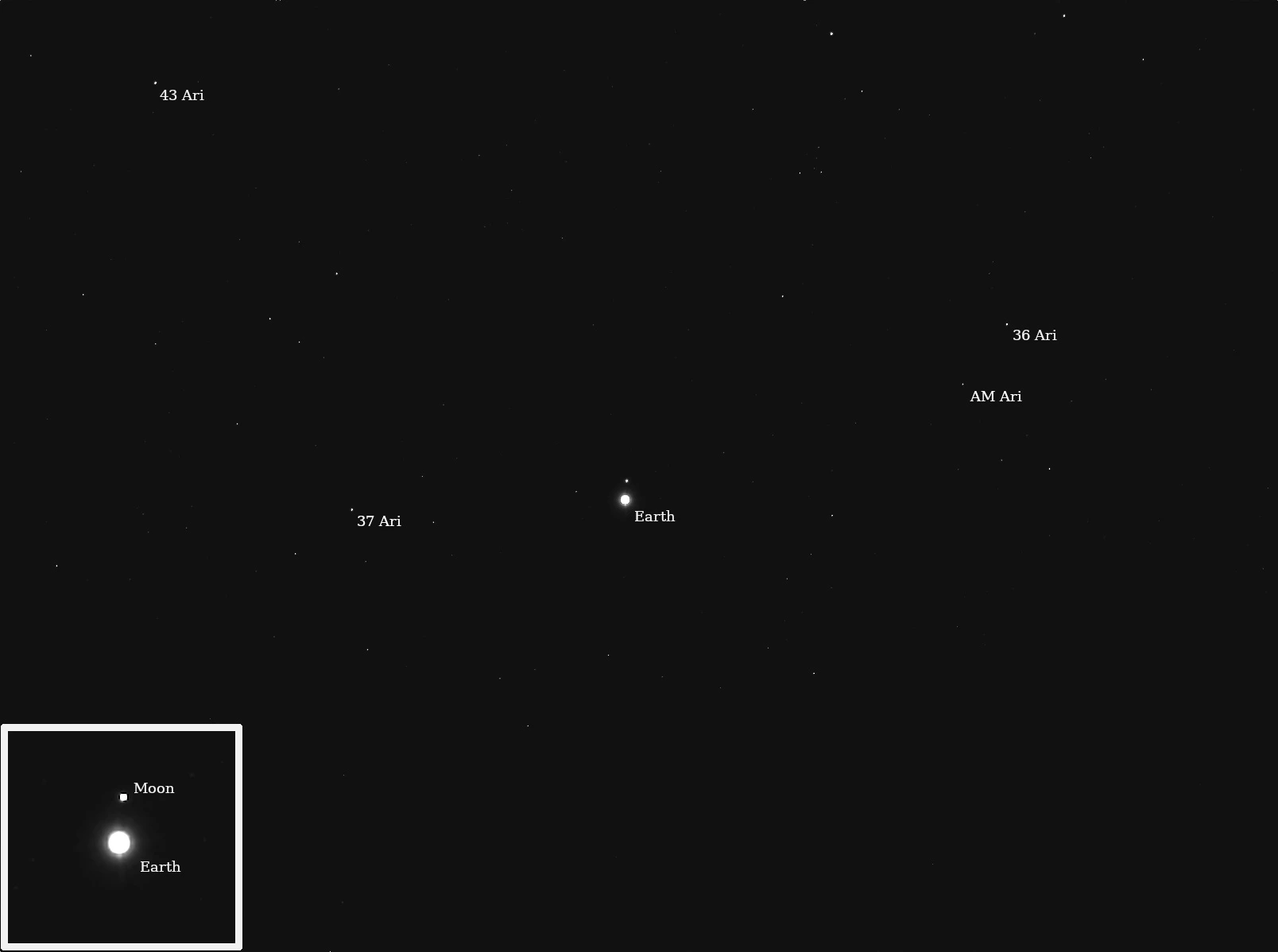
The latest masterpiece comes from an unlikely source: NASA’s Psyche spacecraft, which has captured a humbling and historic view of our home planet from a staggering distance of 180 million miles away.
These images, showing Earth and the Moon as brilliant, isolated dots of light, are more than just a cosmic “selfie.” They are a crucial step in the mission’s journey and a testament to the remarkable capabilities of its instruments.
The Technology Behind the Images
The Psyche multispectral imager is a crucial instrument on the spacecraft, featuring two identical cameras with filters and telescopic lenses. Its purpose is to photograph the asteroid Psyche’s surface using different wavelengths of light.
By analyzing the color and shape of an object’s light spectrum, scientists can determine what it’s made of. For example, the Moon and the giant asteroid Vesta have similar spectral patterns, which scientists hope to find at Psyche as well.
The mission team is interested in this asteroid because it could help them better understand how rocky planets with metallic cores, like Earth, were formed.
For camera testing and calibration, scientists need to find objects that reflect sunlight, just like the asteroid Psyche.
They also look for familiar objects with known light spectra. Earlier this year, the spacecraft successfully calibrated its cameras by observing Jupiter and Mars, both of which have a more reddish spectrum compared to Earth’s bluer tones.
This ongoing calibration ensures the imager is working perfectly for its main mission.
Fine-Tuning Psyche’s Instruments
To make sure the imager’s performance is consistent, scientists compare data from each test. This way, they can be confident the instrument will behave exactly as expected once it arrives at the asteroid Psyche.
According to Jim Bell, the lead for the Psyche imager at Arizona State University, they’re not done yet. “After this, we may look at Saturn or Vesta to help us continue to test the imagers,” he said.
He described the process as “collecting solar system ‘trading cards'” from different bodies, running them through their calibration system to ensure they’re getting the right answers.
A Strong and Sturdy Ship
The imager wasn’t the only instrument to get a successful checkout in late July. The mission team also put the spacecraft’s magnetometer and the gamma-ray and neutron spectrometer through a series of tests, something they do every six months.
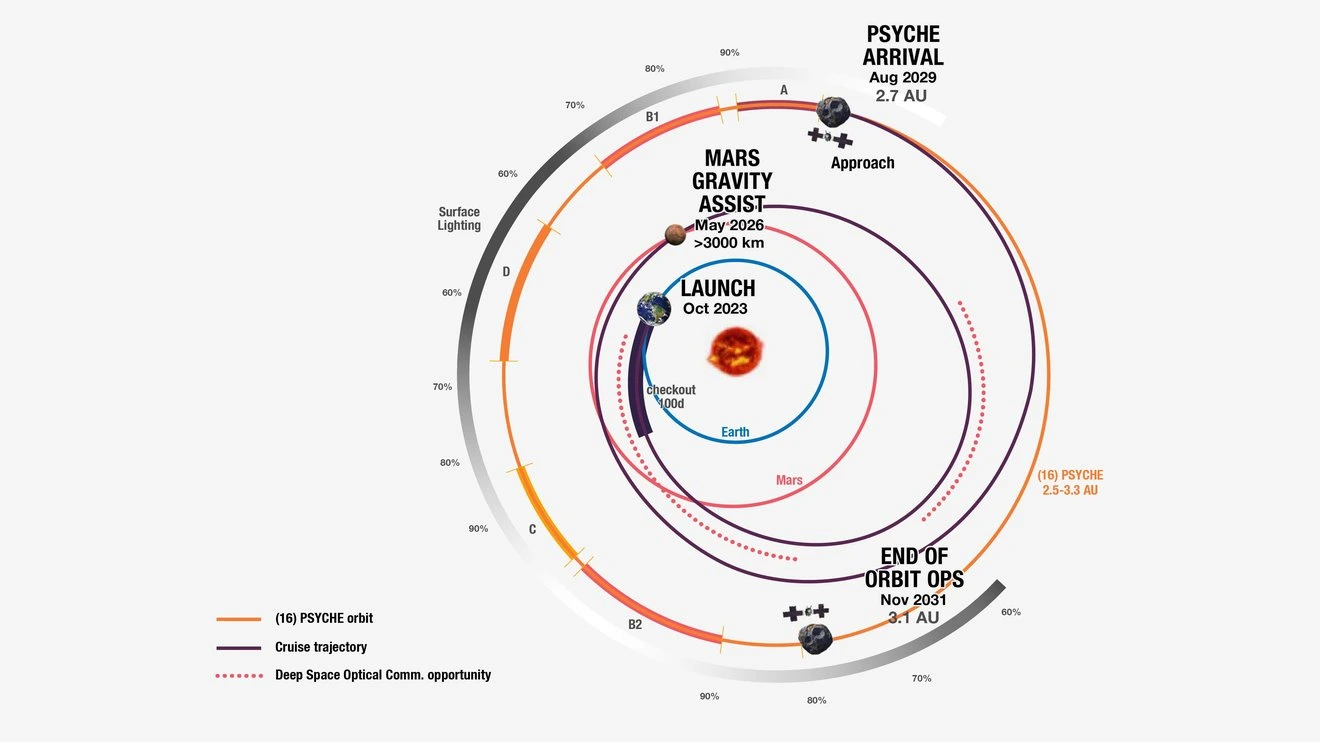
“We are up and running, and everything is working well,” said Bob Mase, the mission’s project manager at NASA’s Jet Propulsion Laboratory. “We’re on target to fly by Mars in May 2026, and we are accomplishing all of our planned activities for cruise.”
That Mars flyby is the spacecraft’s next big milestone. It will use the Red Planet’s gravity as a slingshot to help it get to the asteroid Psyche.
The maneuver will mark the first of two planned loops around the solar system, and will take the spacecraft over 1 billion miles from Earth since its launch in October 2023.
Psyche Spacecraft Captures a Glimpse of Home on Its Journey to a Metal Asteroid
Headed for the metal-rich asteroid of the same name, NASA’s Psyche spacecraft successfully calibrated its cameras by looking back at Earth. On its way to a 2029 arrival, the spacecraft recently captured images of our planet and its Moon from about 180 million miles (290 million kilometers) away.
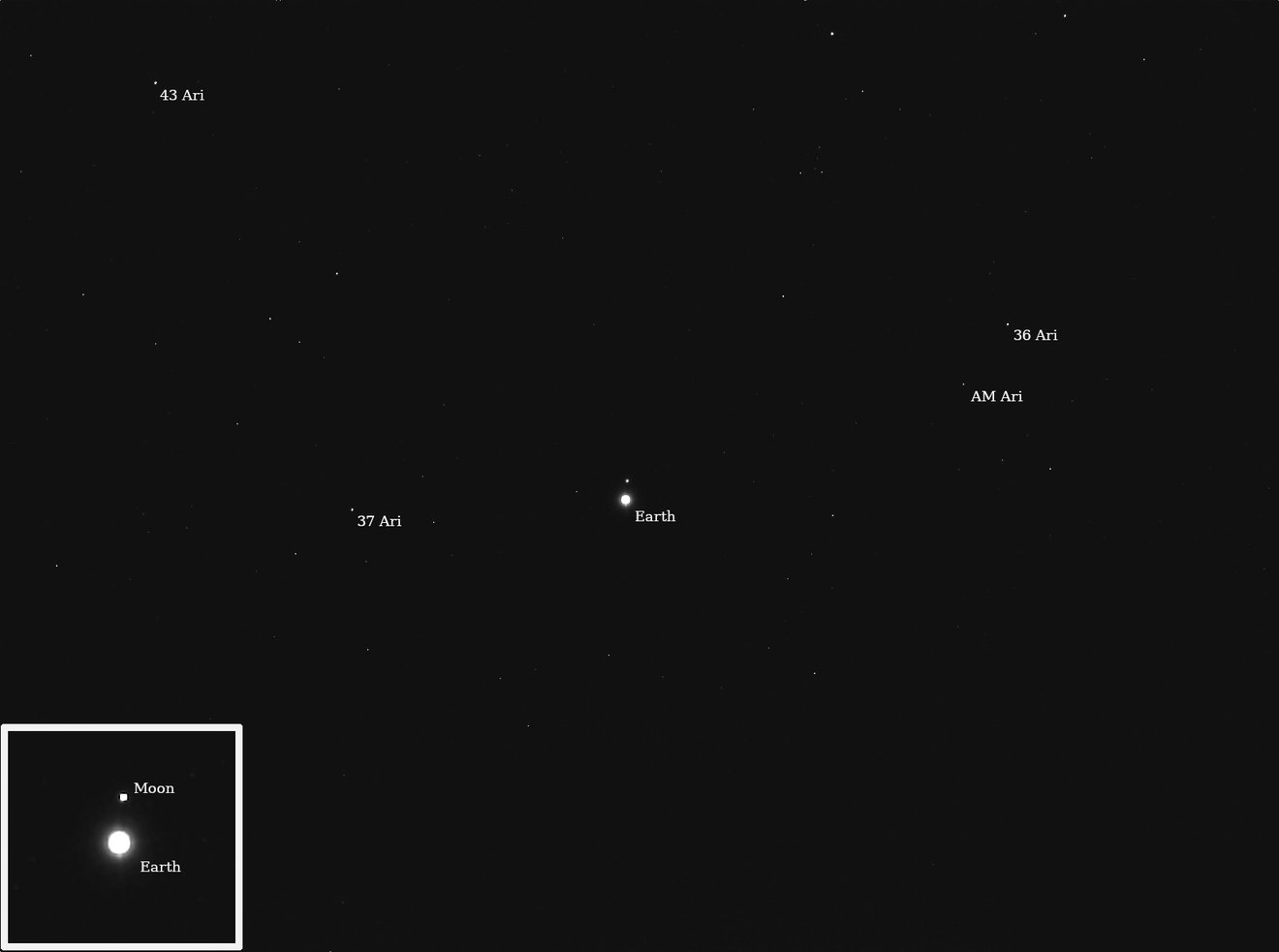
These images were taken during one of the mission team’s routine checkouts of the spacecraft’s scientific instruments. On July 20 and July 23, the spacecraft’s two cameras took multiple long-exposure photos of Earth and the Moon. In the pictures, the two celestial bodies appear as small, sparkling dots of light against a starry background in the constellation Aries.
More About Psyche
Launched in October 2023, the Psyche mission is on a six-year odyssey to an asteroid of the same name, located in the main asteroid belt between Mars and Jupiter.
This asteroid, 16 Psyche, is believed to be the exposed core of an ancient planet, one of the building blocks of our solar system.
Since we can’t directly observe Earth’s core, the Psyche mission offers an unprecedented opportunity to study a metallic world up close and learn more about how our own planet formed.
How Psyche Captured the Images
The recent photographs of Earth and the Moon were taken in July 2025 during a scheduled checkout of the spacecraft’s multispectral imager.
This instrument, which consists of a pair of identical cameras with filters and telescopic lenses, is designed to photograph the asteroid Psyche’s surface in different wavelengths of light.
By examining the color and spectral “fingerprints” of the asteroid, scientists hope to learn about its composition and history. But before it can do that, it needs to be calibrated.
This is where the images of Earth and the Moon come in. The mission’s science team deliberately chose targets with well-understood characteristics to ensure the imager is working perfectly.
Earth, with its distinct bluish spectrum, and the Moon, with its grayer one, serve as perfect celestial benchmarks. The team can compare the data from Psyche’s cameras with previous observations of these bodies, guaranteeing the accuracy of the instrument’s performance.
The images themselves, captured on July 20 and 23, required long-exposure times—up to 10 seconds—to gather enough light to make our distant world visible.
The result is a humbling visual, showing our entire cosmic neighborhood as two tiny specks shining against a vast, dark backdrop in the constellation Aries. They are a powerful reminder of how far the spacecraft has come and the incredible journey that lies ahead.
A Mission of Many Milestones
Beyond the imager, the Psyche team also successfully tested the spacecraft’s magnetometer and its gamma-ray and neutron spectrometer, confirming all systems are functioning smoothly.
With all instruments verified and calibrated, the spacecraft is on target for its next major milestone: a gravity-assist flyby of Mars in May 2026. This maneuver will use the Red Planet’s gravity to slingshot Psyche toward the asteroid belt, setting the stage for its arrival and orbital operations in August 2029.
Conclusion
The Psyche mission is a triumph of engineering and a beacon of scientific curiosity. From 180 million miles away, a small, intrepid robot is not just taking pictures; it’s laying the groundwork for a mission that could reshape our understanding of planetary formation and the very origins of our solar system.
The distant glimmer of Earth and the Moon captured by Psyche’s cameras is a powerful echo of a journey that will continue to push the boundaries of human knowledge for years to come.
Infomration – Thewebnoise Team