

LG G6 OLED vs Samsung S95H: The Definitive Buying Guide for 2026 Flagship TVs
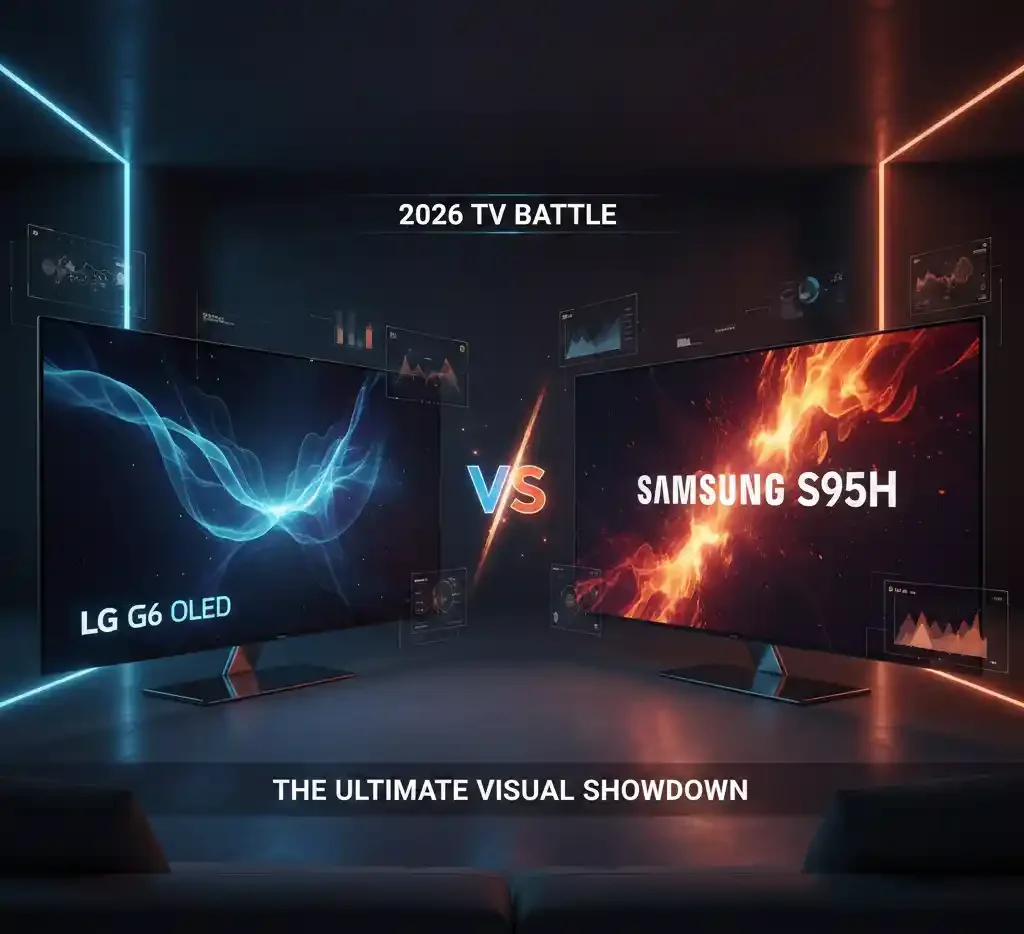
In 2026, flagship OLED TVs like the LG G6 and Samsung S95H redefine home theater excellence with tandem OLED panels that shatter previous brightness limits.
These aren’t just incremental upgrades—they’re revolutionary leaps in picture quality, gaming performance, and anti-glare tech tailored to real-world living rooms.
Whether you’re a cinephile chasing perfect blacks or a gamer battling glare from sunny windows, this head-to-head breakdown helps you decide which 2026 OLED powerhouse suits your setup best.
Gone are the days of “one-size-fits-all” TVs. The LG G6 excels in controlled lighting( Hyper Radiant Color) with Dolby Vision mastery, while the Samsung S95H dominates bright environments and high-frame-rate gaming.
We’ll dive into specs, real-world tests, pros/cons, and buyer scenarios to arm you with the facts for smarter purchasing.
Why 2026 Is the Year of Tandem OLED TVs-LG G6 OLED vs Samsung S95H
Tandem OLED technology stacks multiple light-emitting layers, boosting peak brightness from ~1,500 nits (2024 models) to over 3,000 nits in real HDR highlights—without sacrificing OLED’s infinite contrast.
Both LG and Samsung unveiled these at CES 2026, sparking heated debates on forums like Reddit’s r/OLED.
LG sticks to WOLED (white subpixel for efficiency), now in 2nd-gen tandem form. Samsung refines QD-OLED with quantum dots for richer colors.
Prices start around $2,500 for 65-inch models, with 77/83/97-inch options climbing to $5,000+. Availability hits March 2026 in India/EU/US, with webOS 26 (LG) and Tizen 9.0 (Samsung) for seamless streaming.
LG G6 OLED: The Cinematic Purist’s Dream
LG’s G6 series targets movie buffs with unwavering accuracy. The Tandem WOLED panel delivers ~20% more brightness than the 2025 G5, hitting 3,000+ nits in small highlights for lightsaber glows or starry skies that pop without bloom.
Unmatched HDR Ecosystem: Dolby Vision support across Netflix, Disney+, Apple TV+, and 4K Blu-rays ensures dynamic metadata for scene-by-scene perfection—something Samsung skips in favor of HDR10+.
In dark-room tests, specular highlights retain depth next to inky blacks, ideal for films like Dune: Part Two.
Alpha 11 Gen 3 Processor Magic: This chip powers AI Picture Pro, Dual Super Upscaling (SDR to near-4K HDR), and Object Tracking Sound Pro.
Voices follow on-screen action via 11.1.2 virtual surround, syncing perfectly with Dolby Atmos height channels.
Reflection Handling: The new “Reflection Free Premium” glossy coating slashes reflectance to <0.5%, outperforming prior glossy LGs in moderate light. It avoids matte haze, preserving texture details like rain-slicked streets.
Gaming Prowess: 165Hz native refresh (all 4x HDMI 2.1 @48Gbps), VRR (G-Sync/FreeSync Premium Pro), ALLM, and a 1080p@330Hz Motion Booster for esports. Cloud gaming at 120Hz via GeForce Now shines.
Design and Smart Features: Ultra-slim Gallery Mode for flush wall-mounting, Zero Connect optional for wireless HDMI. webOS 26 adds Quick Cards for sports/gaming hubs.
Drawbacks: Slightly less vibrant in very bright rooms vs. QD-OLED; no native 8K upscaling yet.
Samsung S95H QD-OLED: Bright Room and Gaming Beast
Samsung’s S95H flips the script for lively spaces, leveraging QD-OLED’s self-emissive pixels with quantum boosters for 100% DCI-P3 color volume—punchier reds/greens than WOLED.
Glare-Free Revolution: The matte “Glare Free 3.0” coating scatters ambient light like no glossy rival, making dark scenes watchable near windows. Reflections from lamps or sun vanish, though it introduces minor “haze” on fine details.
Brightness Edge: Claims match LG at 4,500 nits peak, but QD tech sustains higher full-screen whites (~1,500 nits) for sports/HDR sports. Vision AI Processor optimizes in real-time, remastering YouTube to HDR10+.
Gaming Dominance: Full 165Hz VRR across 4x HDMI 2.1, plus optional Wireless One Connect Box expanding to 8 ports.
G-Sync/FreeSync Premium Pro, Auto Game Mode, and 0.1ms input lag crush PS5 Pro/Xbox Series X at 4K/165Hz. PC gamers love the matte for marathon sessions.
Lifestyle Integration: First QD-OLED with Art Mode (Samsung Art Store access), anti-burn-in tech, and a slimmer metal chassis mimicking The Frame. Tizen’s Multi-View splits screen for watch+game.
Audio and Extras: 70W 6.2.2-channel speakers with Object Tracking Sound+; optional subwoofer. SmartThings hub controls your ecosystem.
Drawbacks: No Dolby Vision (dealbreaker for some streamers); matte can soften 4K sharpness slightly.
Head-to-Head Comparison Table
| Feature | LG G6 OLED (Tandem WOLED) | Samsung S95H (QD-OLED) |
|---|---|---|
| Panel Tech | Tandem WOLED | QD-OLED Tandem |
| Peak Brightness | 3,000+ nits (20% > G5) | 3,500+ nits HDR |
| Anti-Glare | Reflection Free Premium (glossy <0.5%) | Glare Free Matte 3.0 |
| Refresh Rate | 165Hz; 1080p@330Hz | 165Hz all ports |
| HDR Formats | Dolby Vision, HDR10, HLG | HDR10+, HDR10, HLG |
| Gaming Features | G-Sync, 4x HDMI 2.1, Cloud 120Hz | G-Sync, 8x ports opt., 0.1ms lag |
| Processor | Alpha 11 Gen 3 | Vision AI 9 |
| Sound | 60W 4.2ch w/ AI Acoustic Tuning | 70W 6.2.2ch Object Tracking |
| Sizes/Starting Price | 55-97″ / ~$2,500 (65″) | 65-83″ / ~$2,600 (65″) |
| Best For | Movies, dark rooms | Gaming, bright rooms |
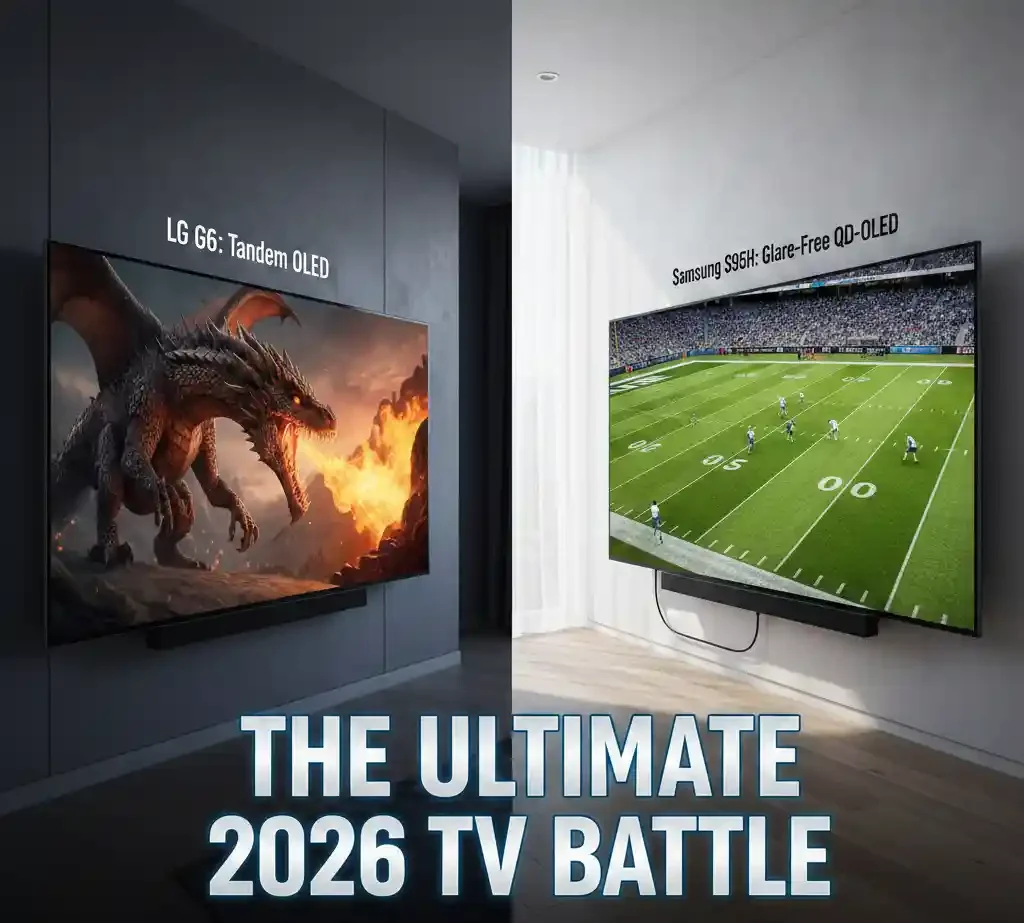
Reflection-Free (LG) vs. Glare-Free (Samsung)
This is where it gets interesting. Samsung uses a “matte” finish to stop glare, which some people think looks a bit dull. LG claims the G6 is “Reflection Free Premium” while keeping the screen glossy. It reduces light bounce to under 0.5%, meaning your blacks stay pitch-black even with the lights on, but you still get that “glossy pop” that makes colors look vivid.
Read Also –5 Key Differences: QNED vs QLED TVs You Must Know
The Verdict: Which 2026 Flagship OLED Wins?
The Verdict: Which one is for you?Again, I am not saying the LG G6 is objectively better. It depends on your house: |
Buy LG G6 if: Your room has curtains/blinds, you stream Dolby Vision content, or prioritize film-grade accuracy. It’s the “director’s cut” TV for Oppenheimer-style epics.
Buy Samsung S95H if: Windows flood your space with light, you’re a PS5/PC gamer, or want art-display vibes. Its vibrancy and cable-free option elevate casual viewing.
Both score 9.5/10 in early reviews—burn-in risk minimized via pixel shift. Factor 3-5 year warranties, energy use (~200W peak), and soundbars for immersion. Check local prices in store via Flipkart/Amazon India.
Frequently Asked Questions (LG G6 vs Samsung S95H 2026)
Is the LG G6 really reflection-free? Yes—its Premium coating hits <0.5% reflectance on glossy glass, beating matte alternatives for black uniformity.
Which is brighter for Indian homes? Samsung S95H sustains better in lit rooms; LG G6 for AC-cooled spaces. Both crush 1080p upscales.
Dolby Vision on these 2026 TVs? LG G6: Full support. Samsung S95H: No, sticks to HDR10+ Adaptive.
Can S95H double as a Frame TV? Absolutely—Art Mode, matte anti-glare, and slim frame make it lifestyle-ready.
Top gaming specs? Tied at 165Hz; LG’s 330Hz mode for FPS pros, Samsung’s port expansion for multi-device setups.
India launch and prices? Expected March 2026; 65″ LG ~₹2.2L, Samsung ~₹2.3L. Pre-book for deals.
Burn-in worries? Negligible with 2026 pixel tech, logos-shift, and 4x lifespan over 2024 OLEDs.