

New Apple Leaks Reveal Design Details for the First Foldable iPhone
For years, the tech world has hummed with a single, persistent question: When will Apple finally fold? While competitors have spent nearly half a decade iterating on hinges and flexible glass, the giants in Cupertino remained silent.
That silence is finally breaking. As we move closer to the second half of 2026, the fog surrounding Apple’s first foldable device is lifting, revealing a strategy that is vintage Apple—deliberate, somewhat controversial, and fundamentally different from anything currently sitting on a store shelf.
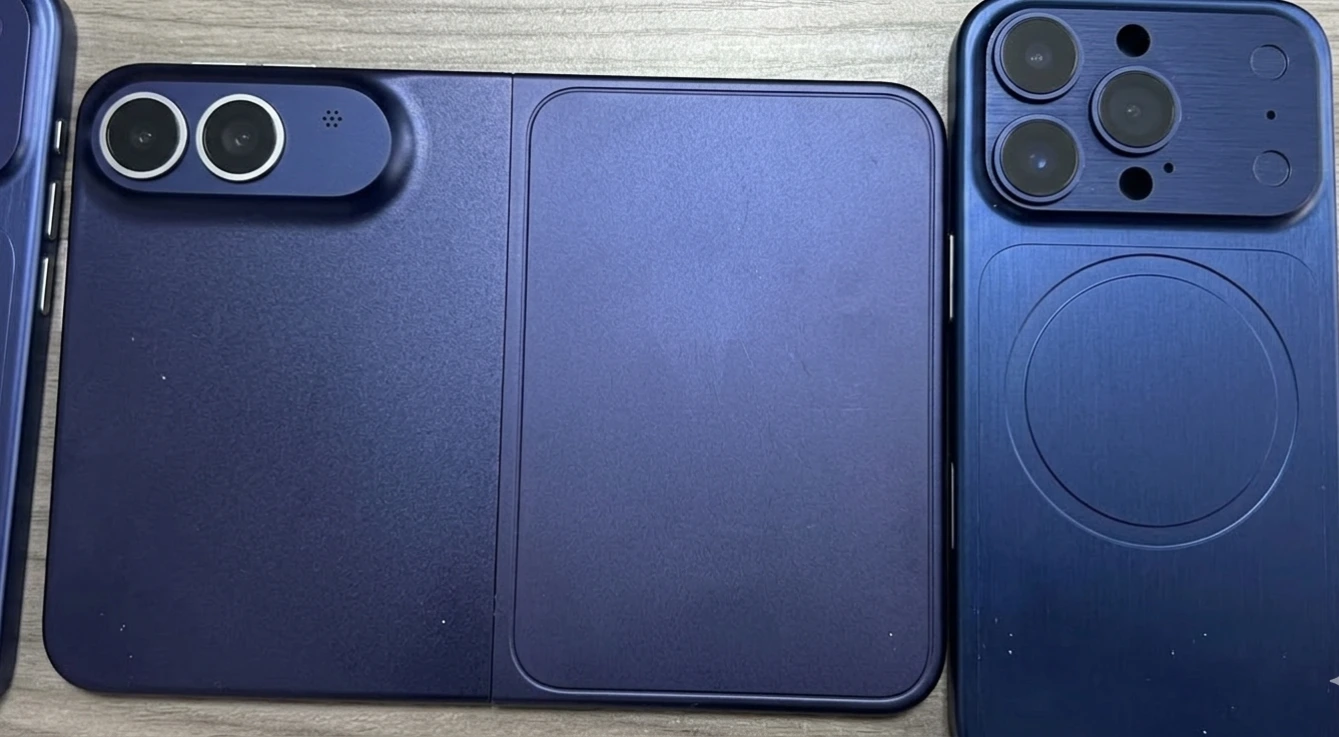
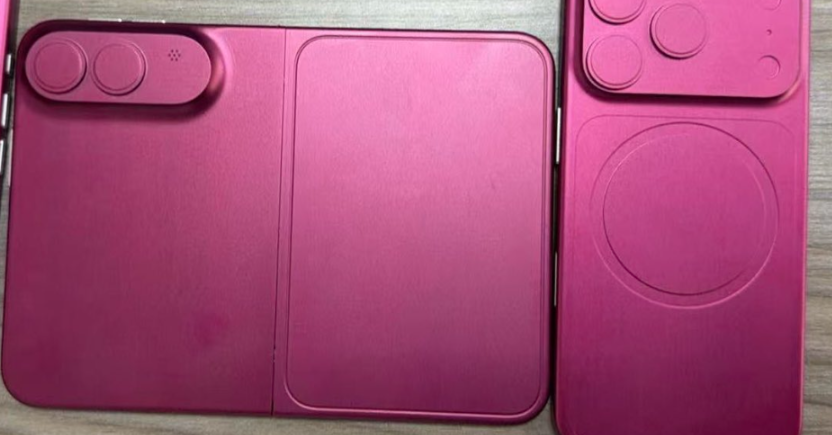
Recent leaks originating from Weibo and corroborated by reliable insiders like Sonny Dickson and Ahmad Ansari have provided us with the most detailed look yet at dummy models for the tentatively named “iPhone Fold” (or perhaps the “iPhone Ultra”). If these leaks are true, Apple isn’t just making a foldable phone; it’s attempting to reinvent the very concept of portability.
Exclusive First Dummies of what the final size of the iPhone Fold, iPhone 18 Pro and iPhone 18 Pro Max will look like. pic.twitter.com/X9P9uBK12p
— Sonny Dickson (@SonnyDickson) April 7, 2026
A Radical Departure in Form Factor: Foldable iPhone
The most shocking revelation from the leaked dummy units is the device’s physical footprint. For years, the industry assumed Apple would follow the “Book-style” blueprint of the Galaxy Z Fold series—a standard phone that opens into a large tablet. Instead, Apple appears to be charting a middle path.
While the “iPhone Fold” does indeed use a horizontal, book-like hinge, the actual dimensions are startlingly compact.
It doesn’t aim to be a massive canvas for spreadsheets. Instead, when closed, the device is significantly smaller than a standard iPhone 17 Pro.
When opened, it reveals a nearly square display. This creates a form factor that sits somewhere between the pocketability of a “Flip” phone and the multitasking potential of a “Fold.”
This nearly square aspect ratio is the clearest indicator of Apple’s “Human-First” design philosophy.
By avoiding the ultra-narrow front screens seen on Android foldables, Apple is ensuring that the device remains usable with one hand while closed, while providing a unique, focused workspace when opened.
Design Continuity Meets Engineering Compromise
Turning the device over reveals a familiar sight: a dual-camera array that mirrors the design language of the current iPhone 17 Pro. This is a strategic move.
By maintaining the iconic camera island, Apple ensures that even its most experimental hardware feels like a member of the iPhone family. It signals to the consumer that, despite the new hinge, the photographic prowess they expect from a “Pro” device remains intact.
However, innovation always comes at a cost, and in this case, the cost is in the buttons’ ergonomics. The internal architecture of a foldable is a nightmare for engineers; the hinge mechanism, dual batteries, and complex ribbon cables leave almost no room for traditional layouts.
Consequently, the dummy models show a placement that will likely spark intense debate:
The Sides: Occupied by the Power and Action buttons.
ADVERTISEMENTThe Top Edge: Home to the volume buttons.
For long-time iPhone users, reaching for the top of the device to adjust volume is far from intuitive. It is a rare “form over function” compromise that highlights the sheer technical difficulty of shrinking a foldable mechanism into such a compact frame. It serves as a reminder that this first-generation device is, in many ways, a high-stakes experiment.
The Great Divide: Mainstream vs. Experimental
Apple isn’t putting all its eggs in the foldable basket just yet. Alongside the Fold leaks, we’ve seen dummy units for the iPhone 18 Pro and Pro Max.
These models appear to follow the steady, refined evolution we’ve come to expect—focusing on chip efficiency, sensor upgrades, and display brightness.
This creates a fascinating polarization in Apple’s lineup. On one hand, you have the iPhone 18 Pro series: the reliable, perfected tool for professionals.
On the other hand, the “iPhone Fold” is an ambitious, slightly eccentric device for early adopters willing to trade some ergonomic comfort for a glimpse into the future of mobile computing.
The Road to a Late 2026 Launch
While excitement is peaking, patience will be required. Manufacturing a foldable at Apple’s scale—and to Apple’s “Retina-level” quality standards—is a monumental task. Rumours suggest that technical hurdles in the mass production of the flexible glass and hinge durability might push the release past the traditional September window. We are likely looking at a late Q4 2026 launch.
It is important to remember that these are still dummy models based on supply chain leaks. Hardware fine-tuning is almost certainly happening behind the closed doors of Apple Park as we speak. Apple has a history of “polishing until it shines,” and they may still find a way to solve the button placement puzzle before the final units hit the assembly line.
Conclusion: Reimagining the Future
One thing is undeniable: Apple is not interested in simply following the Android blueprint. By choosing a small, nearly square book-type design, they are betting that users want portability over raw screen real estate.
Will this “iPhone Ultra” become the new gold standard for mobile devices, or will it be a niche curiosity for the tech-obsessed?
As we move toward the official announcement later this year, the tech world is watching with bated breath.
Apple is about to take its biggest leap since the original iPhone, and whether it lands perfectly or stumbles slightly, the smartphone market will never be the same again.